The lost doors
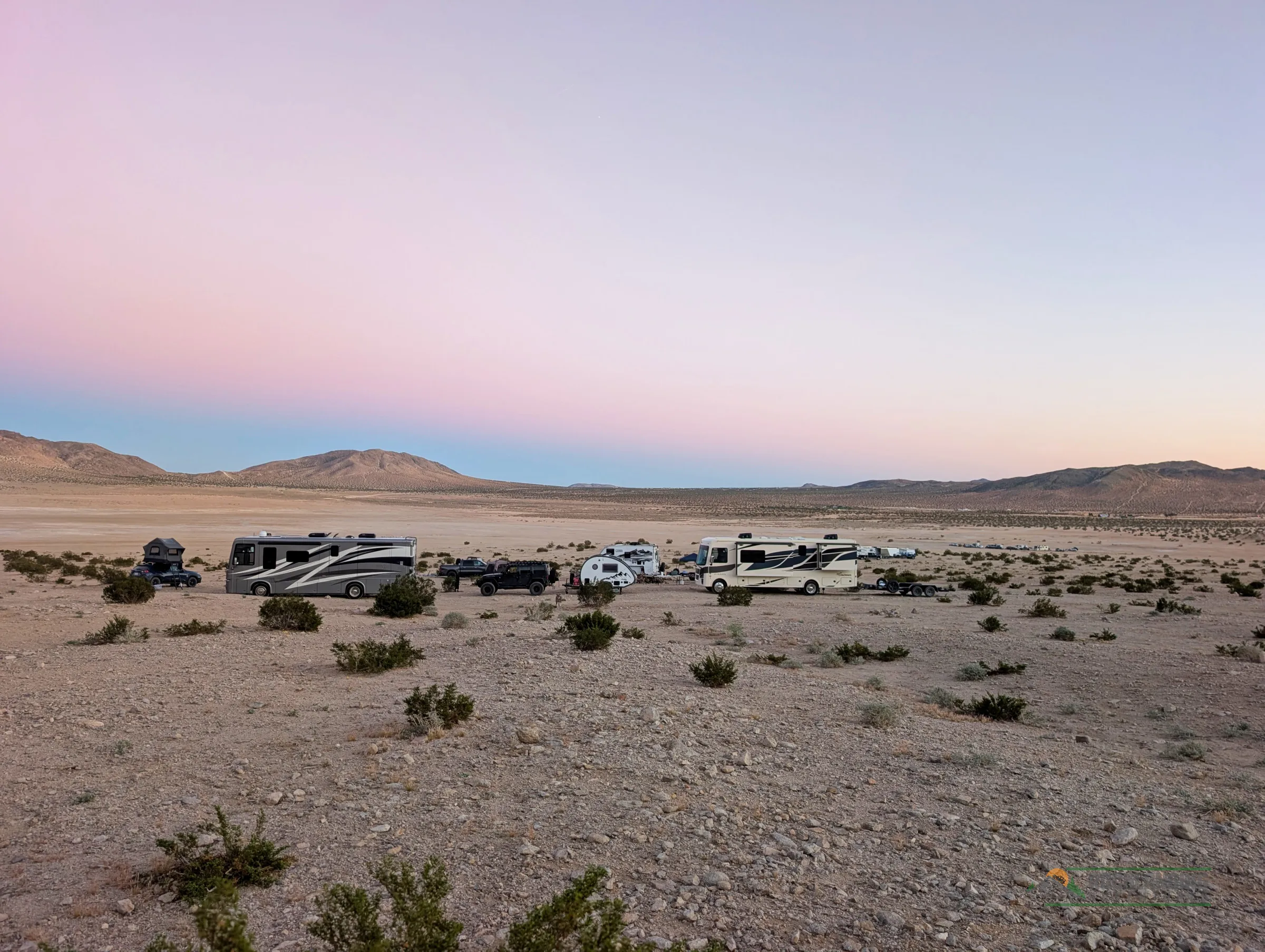
After nine hours on the road, seven rigs were scattered across a dry lakebed somewhere in Johnson Valley. I woke up before sunrise with coffee and watched the sky brighten in the east while the hills behind me stayed dark. When the sun cleared a saddle in the nearby mountains, the temperature jumped. By 8 AM I was already sweating.
Around 9 AM the group was ready to hit the trails. I had no idea I’d be voluntold to lead. The year before, a few of us spent seven hours on Sledgehammer and moved a couple of inches. This time would be different — or so we thought.
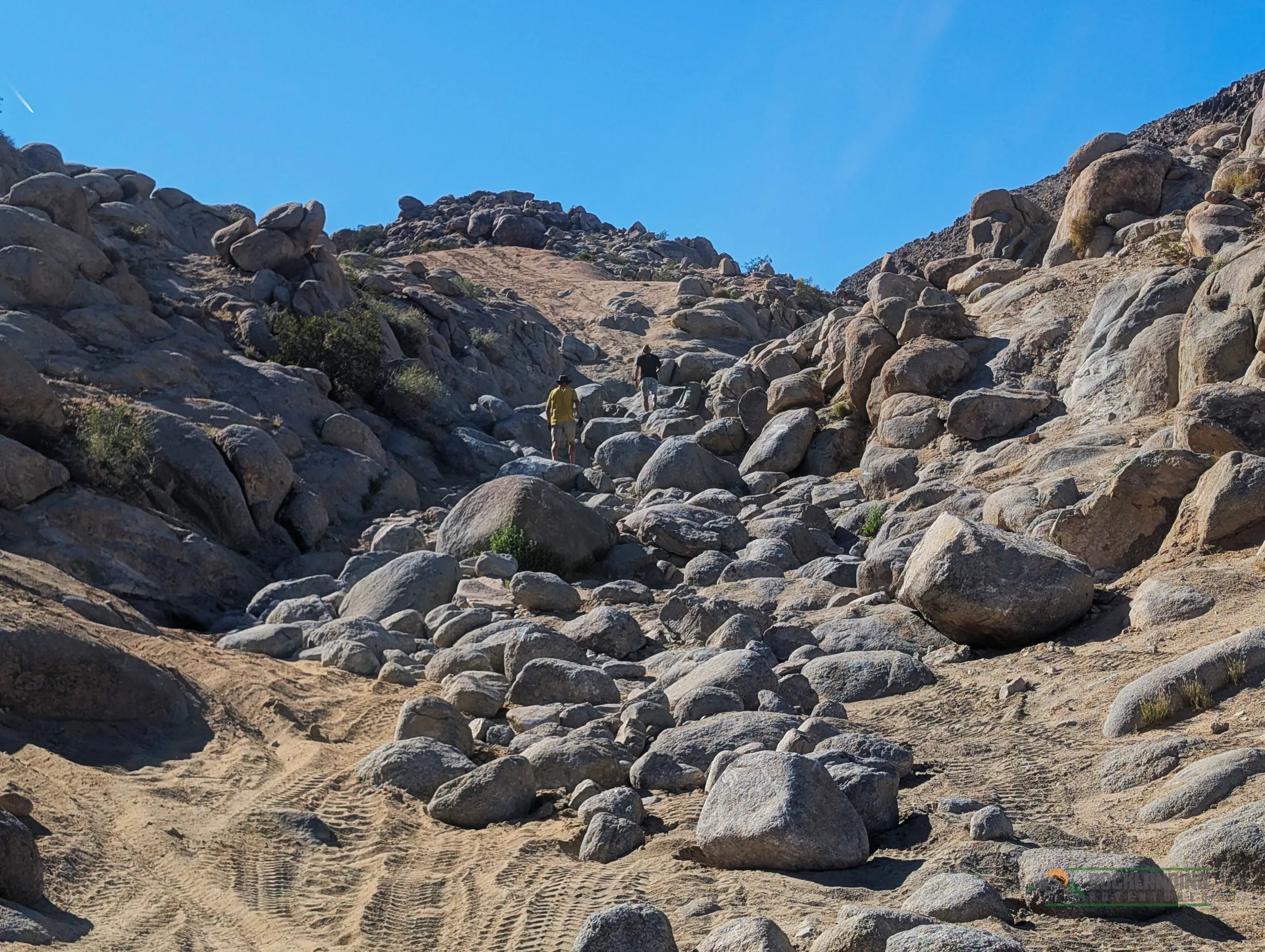
We started at Resolution, rated 8. It seemed like a reasonable starting point while everybody was still fresh. But Johnson Valley doesn’t care about your plan. Boulders bigger than a pickup everywhere. In thirty minutes I got stuck five times. Back up, get stuck, pull the winch, continue, get stuck again. Fred tried to help me down, but there wasn’t enough terrain to safely turn around. The rest of the group watched from a distance while I spent half an hour trying to get off the trail. We dropped down to Guacamole, a 6, and limped back to camp for lunch.
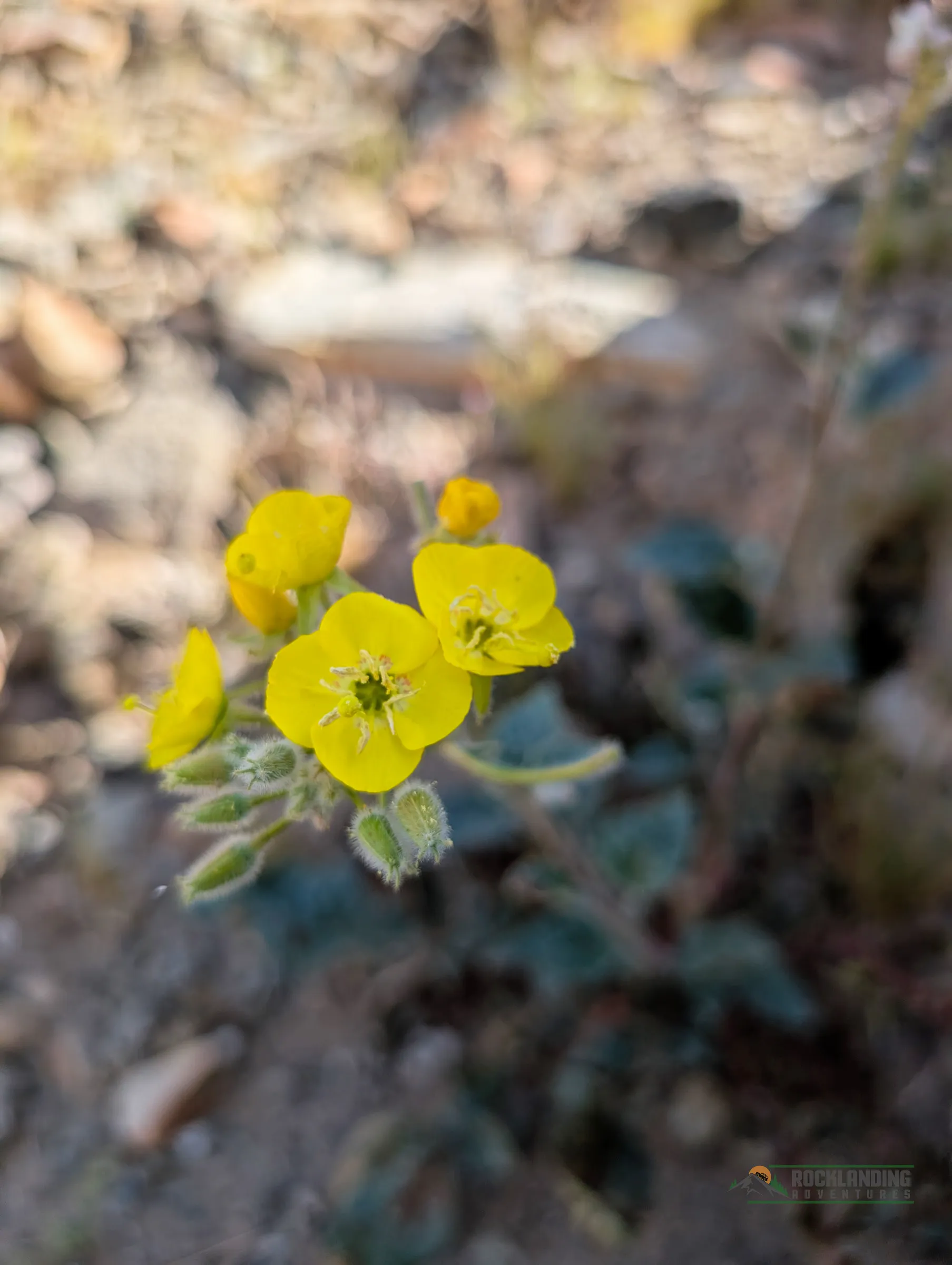
After the break we stuck to easier trails and the day slowed down. Whenever I stopped to let the group catch up, Aga jumped out to photograph whatever was blooming. Purple opuntia flowers wedged between rocks. Patches of small flowers with delicate yellow petals. Green bushes covered in ripe fruits — whenever the wind moved them, I caught a sweet scent, like the best perfume. You don’t expect any of that in the desert.
Turkey Claw, rated 7, starts with a steep climb up a hill of hot, loose sand. Jake, Mike W’s son, was driving a stick, but without enough seat time to feel comfortable on the climb. The risk of stalling was real. Mike R and Jake decided to go around the hill and rejoin the group on the other side.
Most of Turkey Claw was easy. Then we hit the intersection with Little MC and I understood what a 7 really means. The last three hundred feet to the bottom were riddled with boulders — some bigger than my Jeep.
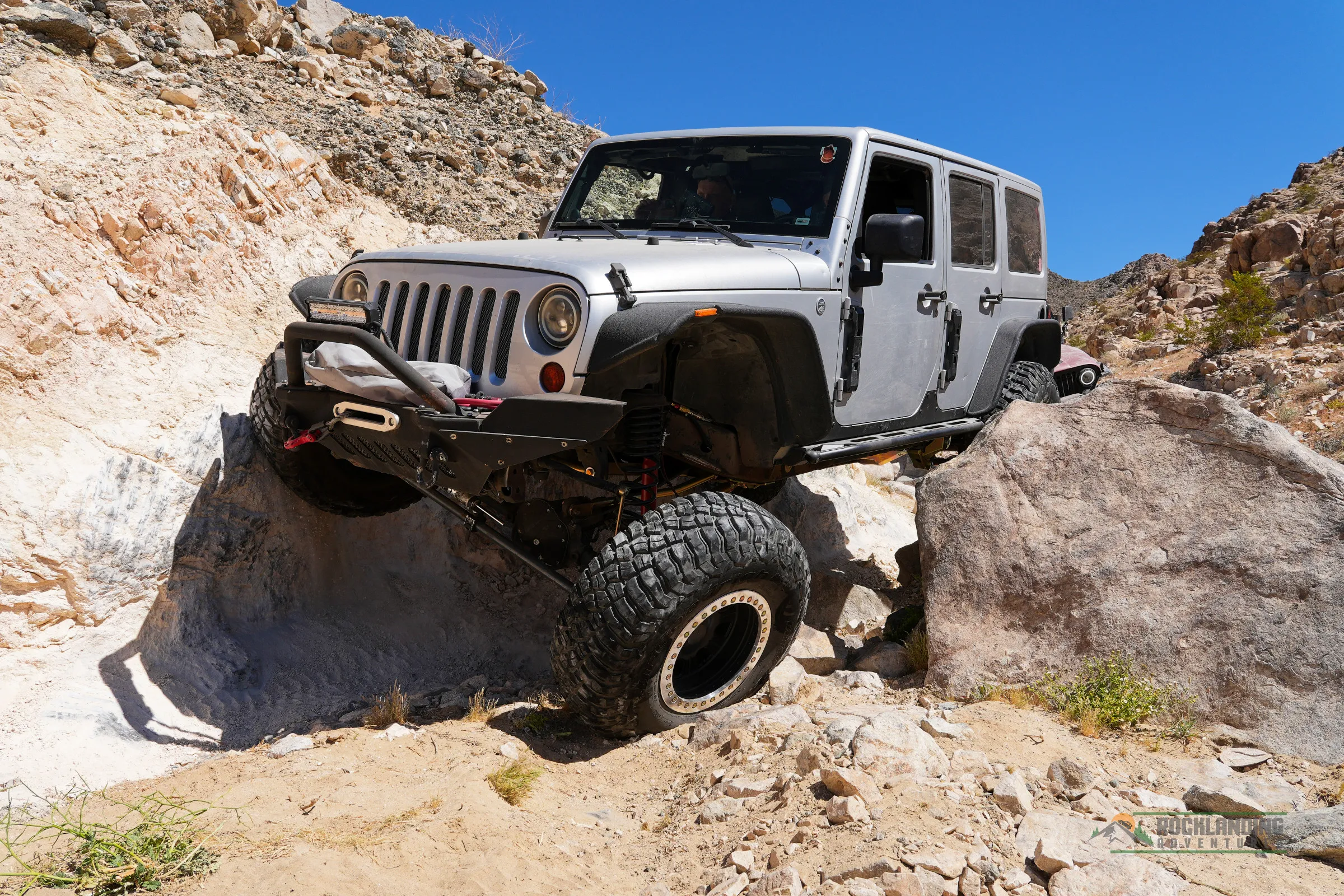
I got between two big rocks about a Jeep apart. From the cab I couldn’t see anything below the hood. Mike W was guiding me through.
I knew there was about a foot drop. I slowly rolled forward. My front tires dropped from the ledge. The passenger side went into a hole in the dirt. The driver side stayed high. The whole rig leaned toward the bigger rock. I wanted to go back up but the ledge stopped me. No grip. I could only go forward. Inch by inch. My rock sliders scraping against stone. It looked like I’d clear it. Then Fred yelled to stop. The rock had caught my side ladder. The driver side lifted and pushed everything toward the boulder. Fred jumped onto the rock and leaned on the rig to push it away. It saved the ladder. But the passenger doors were already against the rock. No sound, no squeak, no crash. The panel was dented.
Then I was through. The trip was not going to be cheap.
Learning from my mistake, we got all the other rigs through. Sometimes it sucks to be the first.
At the bottom, we rejoined with Mike R and Jake, and then looped back and tackled Turkey Claw again. The way back was much easier, so we got back to the camp around 5 PM.
Lee started two smokers Wednesday night. Twenty four hours later we had pulled pork. Fred pulled out ice cream and nobody questioned it after the long day. The night wrapped up around a campfire.
A lawn mower
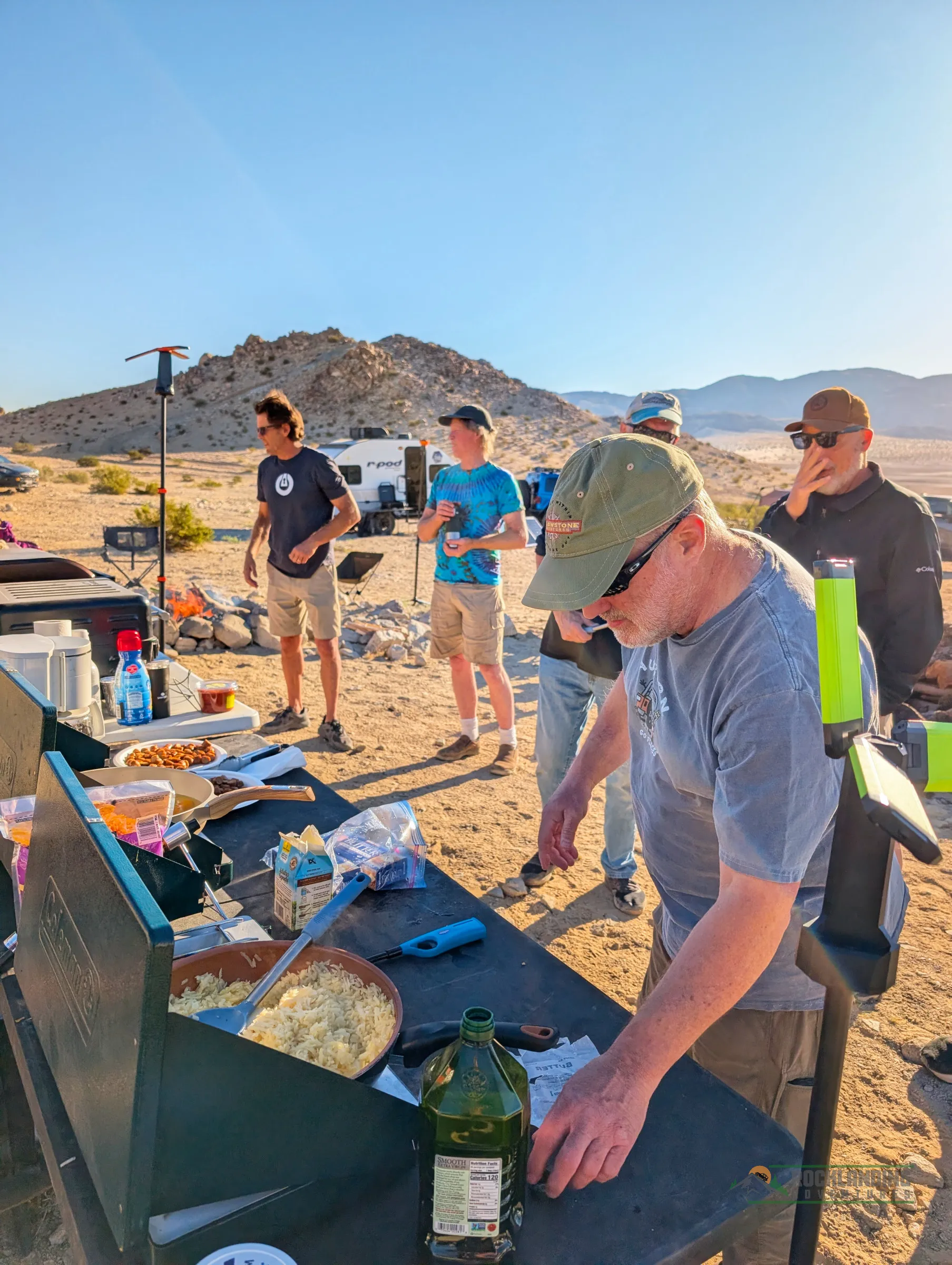
Friday was kitchen duty. Aga and I prepared scrambled eggs and sausage while Jeff and Jimmy handled tortillas. By the time we hit the trail, the forecast was already promising close to 100 degrees.
A heat wave had rolled through California. Even at night the temperature barely dropped. The basecamp sat on the east side of a hill — sheltered from wind, but baking in the sun.
The plan for Friday was to have a long day on trail, cruising around Johnson Valley. We started at Fissure Mountain (5), near the Hammers — the same hills where King of the Hammers began almost twenty years ago. The story from Resolution repeated itself. Loose sand on the western slope. We tried two more trails that morning. Both shut us down.
We headed toward Big Johnson (4), but we never made it.
Between the dunes, Jake’s rig lost power and couldn’t keep up. His Jeep sounded like a lawn mower. We turned around and headed back to camp.
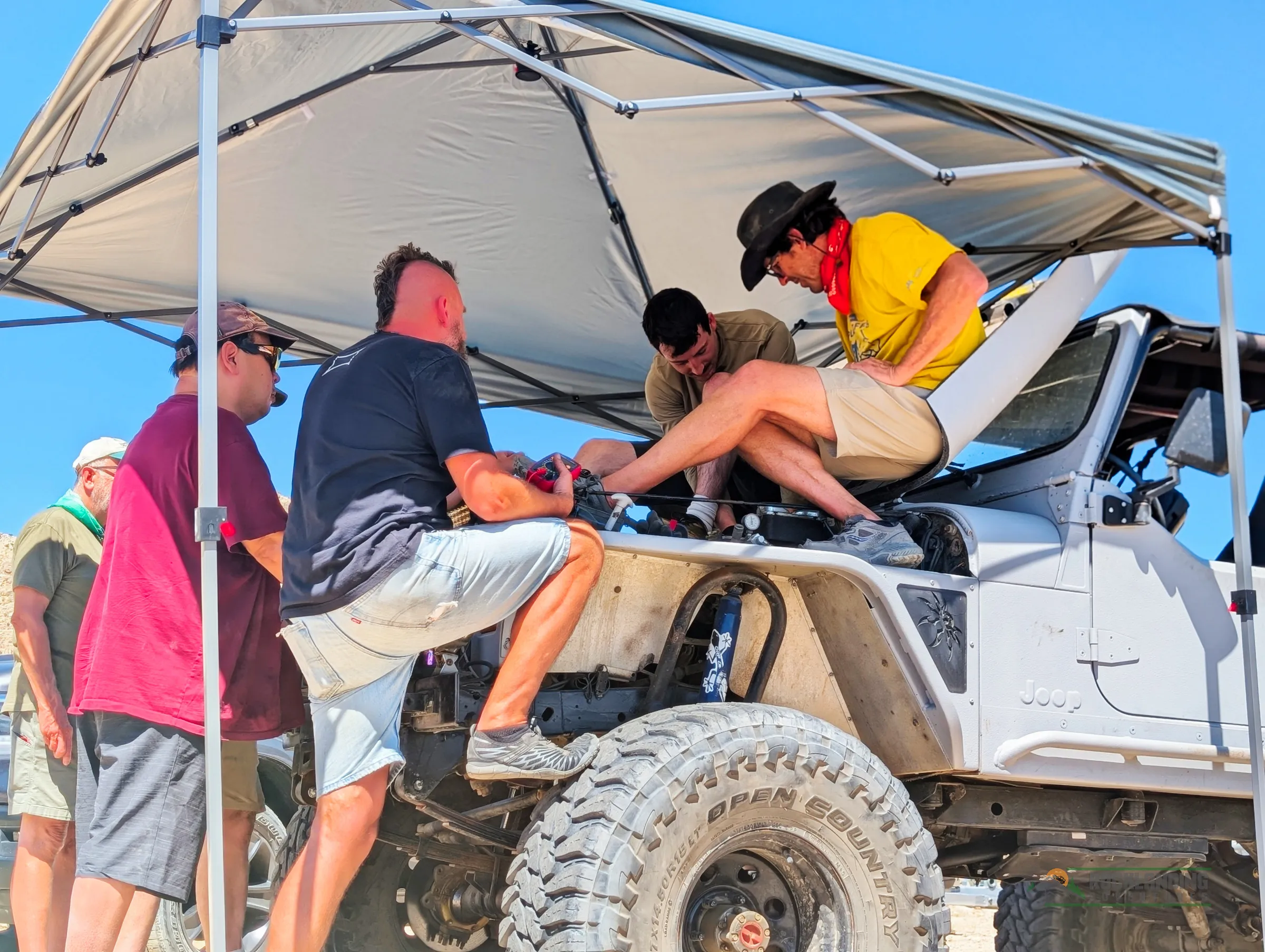
Thanie — the group’s go-to for electrical gremlins — started tracing the fault. Air filter apart, fuel injector checked, wires traced through the engine bay, across the firewall, under the passenger seat. An hour of work. The culprit: one blown fuse.
With the afternoon still ours, we checked Blueberry, a 7. The trailhead looked like the Moon surface — ledge after ledge with no clear end. We’d learned that lesson the day before.
Mike W found unnamed track off the map. Johnson Valley OHV is open riding, so we traced existing paths through smaller rocks — no dramatic drops, just a slow stroll to close out the day. Whenever I stepped out, my calves burned against the rock sliders. Even with the AC running, the cab was stifling.
That night the kitchen crew served very dry grilled chicken with Caesar salad, chased by another round of Fred’s ice cream. Nobody complained.
The Jeep train
Saturday was our last day to conquer trails, so we wanted to go back to Big Johnson.
The nice and easy start of the day — promising a pleasant experience — quickly turned rough. The whole hill was rubble. The moment I approached it, none of the rocks stayed in place; they shifted left and right, slid and rolled, changed positions. My tires couldn’t get a grip. Instead of trying to fight that, Mike R suggested to try another route: soft and slippery sand.
I tried the sand. My tires were spinning. Moving backward to get momentum, moving forward, and losing grip. The only result: deeper ruts. It already took about an hour. Without a winch, there was no way I could drive up. Mike R quickly found a huge rock, used my strap, and I hauled myself uphill. This small help was enough to get me moving again. On the flat I set up my awning for shade. It was necessary to survive the next few hours. Aga with our dog Nina stayed behind, while I walked back to help others.
No one knew that something relatively easy would become a slog for the next 7.5 hours.
Heat was coming from every direction, nowhere to hide. I crawled under a huge boulder for relief and made it worse: no breeze, heat radiating off the stone, and nowhere obvious to refill bottles. Thirst stopped being abstract — in no time, everyone was low on water.
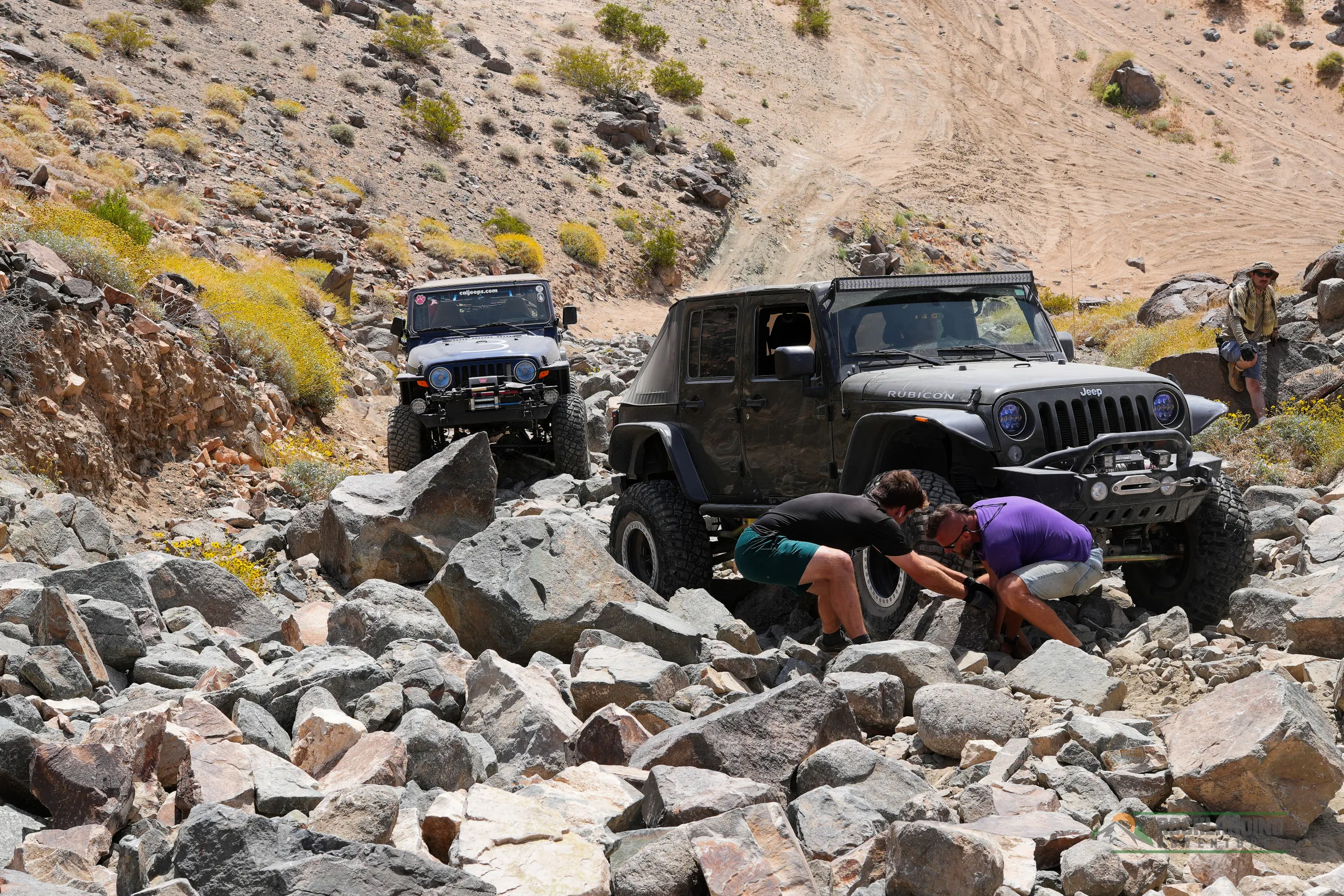
The hill had three nasty spots: the loose sand section; the ledge rock; the off-camber climb. Lee tried to go over the first section in his Gladiator. He drove it all the way down from Colorado, so we were extra careful to not break it. Even with the long base, Mike W couldn’t get him over it. The strap and winch had to be used again. Before Lee finished winching himself up, Fred sped through the section like a hot knife going through butter. He took a long runway, and the moment he caught first sand, he didn’t slow down.
By late afternoon, all rigs were at the top. Jeff’s new long-arm made the difference — his Jeep handled every obstacle cleanly, a real improvement from the year before.
Which made what happened next worse.
By the time I got to the top of the hill, I noticed some concerning chatter. Jeff’s Jeep had a problem. When he was moving forward, we could hear a weird noise. After a closer look, we noticed that the angle between the rear driveshaft and the axle was changing. It wasn’t immediately clear what the problem was. We agreed — this couldn’t be fixed on the trail. We had to get Jeff out of the mountain and down to the camp. To get him running, guys attempted to remove the rear driveshaft and just use the front. Due to skid plates placement, it was impossible. Without any other options, we hooked up Fred as a tow rig. Jeff switched to “N”, turned on the engine, and hoped for the best.
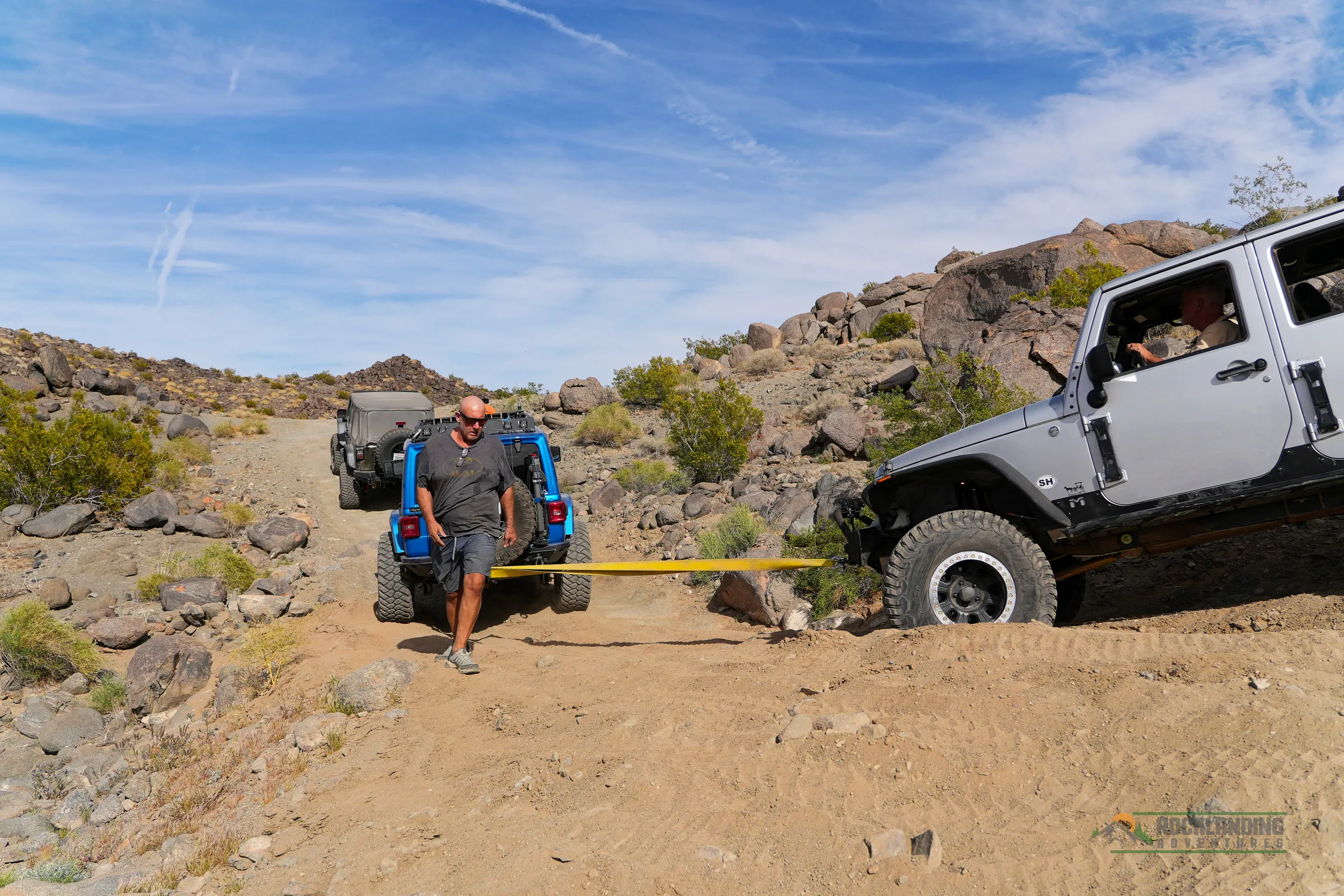
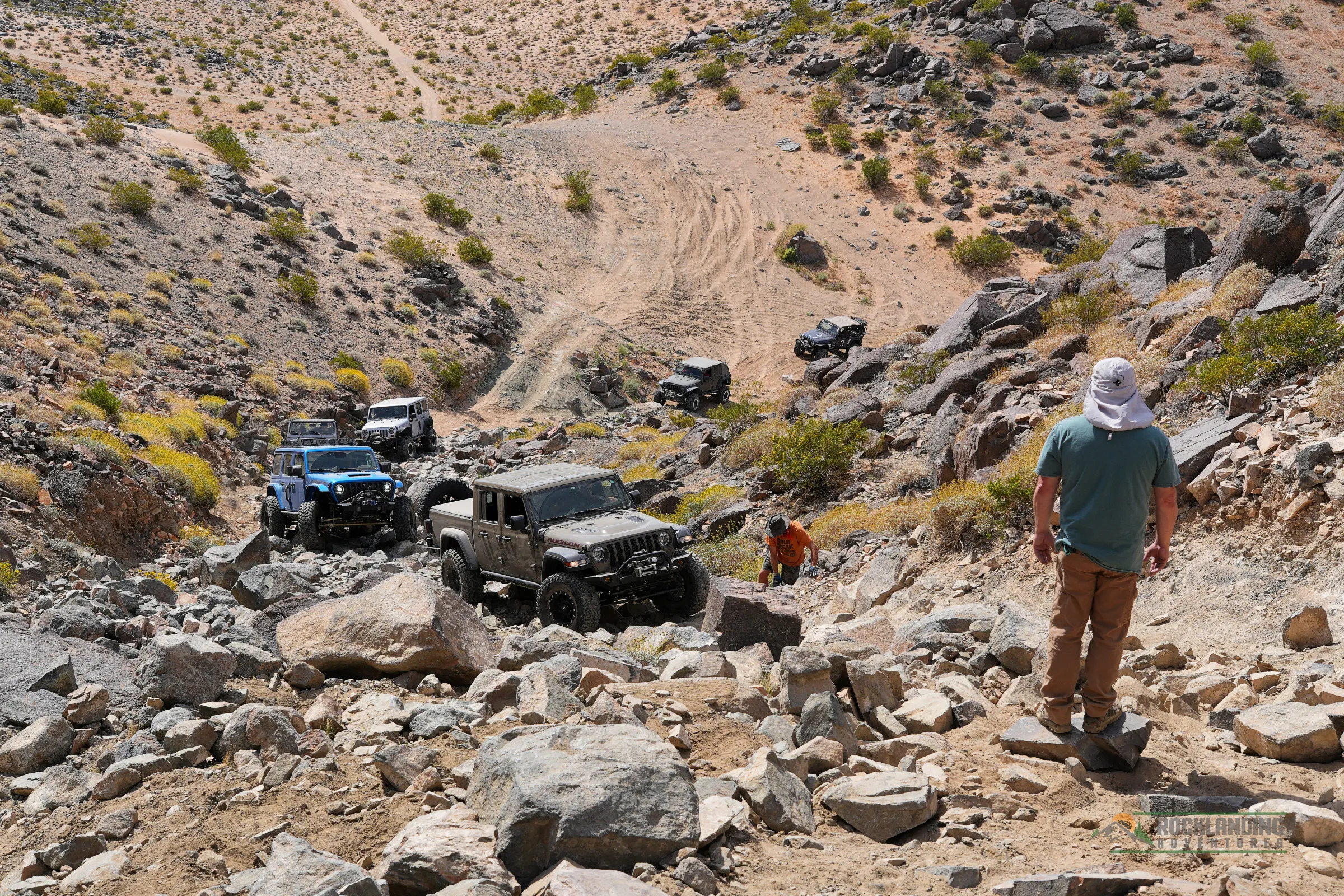
On the map it looked like we had about 500-600 yards and two small climbs to get out of the trail. Even with all the power of the V8, Fred’s Jeep was struggling. To help him, we hooked up Mike Wu, and created a “Jeep train”: Mike first, Fred behind him, and Jeff at the very end. We reached the cutoff and slowly proceeded down the canyon.
The third of the way down the hill, I reached a drop. Where I stopped, I already saw the lakebed. We had another 100 yards to get down there. That was the last obstacle to get us back to the camp. From the outside of the cab it looked even worse; about 5-6 ft steep drop, V-notch, with about 45 degrees downhill angle. For able-bodied rigs it would be a challenge. Getting Jeff’s Jeep — technically a dead weight — over it seemed impossible. Mike R joined me to take a look at it. Going straight down the hill would mean risking safety of all the rigs, especially Fred’s and Jeff’s. I didn’t want that. On the right side there was a bypass too… but it didn’t look any better. Initially, I would need to climb up a very short and steep hill. After going over the hump, there was immediate off-camber drop. Similar to before, the drop was full of loose rocks. Going down that route meant keeping a foot on brakes all the time. There was no room for mistakes.
I already knew Fred had problems when towing Jeff. Going down the hill sounded bad, but going up and off-camber was worse. None of these looked good. I needed to hear from others. I called on radio, and I wasn’t very convincing that we could make it. If there was no other way, we could try it. But I wanted to avoid it.
Mike W decided to turn around and check the other part of the trail. He found a much better way out. Instead of taking the cutoff, we could continue straight. But we were already pointing down the hill, with Jeff’s limping rig.
One-way trail caused extra challenge. Fred had to go around Jeff’s rig, which meant going off-camber. I felt uncomfortable with the angle, but he pulled it off. Pulling back Jeff’s rig took extra effort from Fred and Mike Wu. They hooked everything back, and we were ready to follow Mike W. Not even half an hour later, we were back on the lakebed without any extra adventures.
Now we just had to slowly roll back to the camp, so Fred’s Jeep was getting about 2-3 MPG. Without any more issues, about 5 PM we got back to the basecamp.
Because that was the last night, everybody started packing up. Gathering all the stuff after 4 nights in the desert is always challenging. However, by 7 PM most of us were ready.
Jeff and Jimmy decided not to wait until Sunday morning, and wanted to leave early. Mike R followed them. It left us in a smaller group. Due to high winds, we didn’t even bother to start the campfire for the last night, and quickly we dispersed to campers and tents. But the campfire had other plans, and it reignited itself around 9 PM. Quick “fire drill” took place, and it was dead for sure this time.
Going home
The trip back home usually takes us 7-8 hours, so we weren’t in a rush. When we got to Barstow, CA, we noticed Mike Wu on the side of a highway. He got stopped by a broken tow bar, almost losing his Jeep. There were Brian and Thanie already, who helped Mike to get it fixed, so we continued back home. Looks like Johnson Valley keeps breaking stuff even after you leave.
Summary
The tally:
- my Jeep: crashed rear passenger doors, issues found during a routine maintenance check: worn ball joints, loose steering stabilizer, loose track bar
- Jeff: full replacement of rear axle — current one is irreparable
- Fred: damaged rear passenger shocks
- Mike Wu: almost lost his Jeep, but nothing bad happened
I’d go back tomorrow.
Gallery